

Our areas of expertise



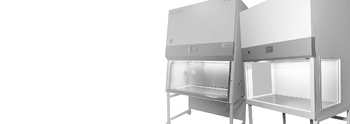
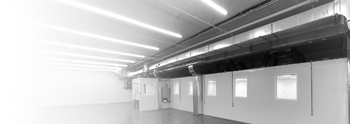


A cleanroom is a controlled environment specifically designed to minimize contamination from airborne particles, microorganisms, and other contaminants. Unlike conventional workspaces, a cleanroom maintains ultra-clean air conditions through advanced filtration systems, precise temperature and humidity control, and rigorous management of pressure differentials. It is an essential investment for industries where even the smallest impurity can compromise the quality, safety, or reliability of the products being manufactured.
Why are cleanrooms essential?
Cleanrooms are not a luxury; they are a critical necessity for ensuring regulatory compliance and product quality. For several years now, stricter government and international standards have made cleanrooms indispensable in many sensitive sectors. Here’s why they have become essential:
- Quality assurance and product reliability: In manufacturing, development, packaging, and repackaging processes, a cleanroom eliminates the risk of particles or contaminants compromising raw materials or finished products. This protection ensures that products meet stringent quality specifications and function properly once they reach consumers or end users.
- Patient and user safety: Particularly crucial in the pharmaceutical and medical sectors, maintaining a sterile environment prevents the introduction of bacteria or foreign substances that could endanger patients’ health.
- Regulatory compliance: Regulatory agencies such as the FDA (United States) and European health authorities require that certain products—including injectable drugs, medical devices, and critical electronic components—be manufactured in certified cleanrooms.
The 6 Fundamental Control Parameters
To create and maintain an effective cleanroom, several variables must be continuously controlled and monitored. These parameters work together to minimize the introduction, generation, and retention of particles and contaminants:
1. Airborne particle concentration
This is the most visible and most frequently measured parameter. The number of particles per cubic foot (U.S. federal standard) or per cubic meter (ISO standard) is evaluated based on specific particle sizes (typically in micrometers). The ISO 14644-1 standard classifies cleanrooms from ISO 1 to ISO 9, with ISO 1 being the cleanest environment.
2. Temperature and Relative Humidity
These two factors are closely related and essential for sensitive processes. Most cleanrooms maintain precise ranges: temperature between 19–23°C (64–72°F) and relative humidity between 30–60%, depending on the classification and application. Even minor variations can affect pharmaceutical products, electronic components, and testing processes.
3. Dew Point
The dew point is the temperature at which the air becomes saturated with moisture and begins to condense. Inadequate control of the dew point leads to mold growth, equipment corrosion, and the degradation of sensitive products. It is a crucial factor that is often underestimated in cleanroom management.
4. Differential air pressures
Cleanrooms maintain positive or negative pressures relative to the outside environment. Positive pressure (more air flowing in than out) protects the product from external contamination and is suitable for sterile pharmaceutical applications. Negative pressure (more air leaving than entering) confines hazardous contaminants within the room and prevents them from spreading, which is crucial for highly toxic substances or biological hazards.
5. Airflow Patterns and Velocity
Airflow can be unidirectional (vertical or horizontal, from ceiling to floor) or non-unidirectional (turbulent, mixed). Unidirectional flows provide better protection for critical processes, while non-unidirectional flows are sufficient for less demanding environments. The average airflow velocity must be precisely controlled to ensure effective particle removal.
6. Mechanical Systems
HVAC (heating, ventilation, and air conditioning) equipment, HEPA/ULPA filters, air handling units, and all other systems must operate optimally. A failure in these systems immediately compromises the quality of the cleanroom.
**CTA IMAGE — INTERNAL LINK TO THE “CLEANROOMS” PAGE**



The greatest source of contamination: humans
One of the most significant challenges in cleanroom management is human contamination. Research shows that people are responsible for 70 to 80% of contamination in a cleanroom—far more than equipment, workstations, and materials combined.
How do humans contaminate a cleanroom?
Even when fully clad in appropriate protective clothing, a person standing still generates about 100,000 particles per minute. This contamination comes from:
- Shed skin cells: Humans shed about 1 billion skin cells per day, of which about 10% contain microorganisms.
- Hair and other fibers: Even under a protective cap, hair and fibers from clothing continue to become airborne.
- Breathing: Every breath releases respiratory droplets containing bacteria that are naturally present in our respiratory system.
- Cosmetics and personal care products: Makeup, mascara, nail polish, perfumes, and hairsprays all generate problematic particles. Lipstick alone generates 1.1 billion particles per application!
- Sweat and perspiration: Physical activity increases particle generation.
- Movement and activity: A person walking generates 1 million particles per minute, while a person engaged in intense activity can generate up to 5 million particles per minute.
This explains why controlling human behavior and following gowning protocols is a critical component of the contamination control strategy in any cleanroom.
Several industries require cleanrooms
Cleanrooms are used in a growing variety of industries, but they are particularly essential in the following sectors:
1. Pharmaceutical industry
This is one of the most demanding sectors when it comes to cleanrooms. Sterile environments are essential for the manufacture of:
- Injectable medications (vaccines, biologics, sterile injectables)
- Oral and topical pharmaceutical products
- Ophthalmic solutions
- Inhaled products
Pharmaceutical cleanrooms must generally comply with ISO 5 through ISO 8 classifications, depending on whether they are critical aseptic filling areas or preparation and packaging areas. Non-compliance can lead to product recalls, regulatory fines, and, most importantly, put patients at risk.
2. Microelectronics and Semiconductors
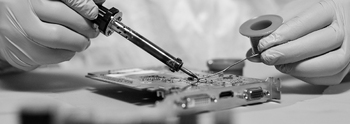
The manufacture of microprocessors, integrated circuits, and other electronic components is extremely sensitive to particulate contamination. A single speck of dust can destroy an integrated circuit, causing millions of dollars in losses. Semiconductor cleanrooms must maintain ISO 4 to ISO 8 conditions, with rigorous control of temperature, humidity, and electrostatic discharge (ESD).
3. Medical Industry (Medical Devices)
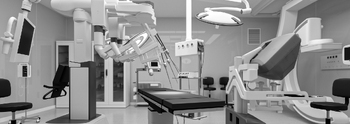
The manufacture of sterile medical devices, prosthetics, surgical instruments, catheters, stents, and implants requires ISO 5 to ISO 8 cleanrooms, depending on the device’s criticality. For Class II or III devices, ISO 13485 certification (Quality Management Systems for Medical Devices) is required.
4. Food production
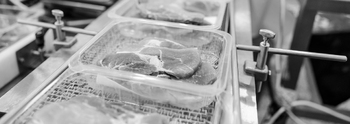
Although historically less associated with cleanrooms than the pharmaceutical or electronics sectors, the food industry is increasingly adopting controlled environments to ensure product safety and integrity. Food-grade cleanrooms control microbial contaminants, foreign matter, and the risk of cross-contamination, particularly for:
- Dairy products and derivatives
- Ready-to-eat products
- Beverages
- Frozen foods
Typical temperatures range from 18–24°C with humidity levels of 45–65%, depending on the product.
5. Aerospace
In the aerospace sector, particulate contamination can affect the performance of critical components, optical sensors, and onboard electronic equipment. Assembly and testing activities most often take place in ISO Class 7 to ISO Class 8 cleanrooms, while certain high-precision sensors and optical components require stricter environments, down to ISO Class 5. For example, the European Space Agency operates ISO Class 1 cleanrooms for extremely sensitive operations related to space missions.
6. Biotechnology
Biotechnology research and production—including cell culture, DNA/RNA amplification, bacterial biofilms, and vaccine production—require ISO 5 cleanrooms, which are generally equipped with laminar flow hoods or biological safety cabinets. These environments prevent cross-contamination of cultures and ensure the integrity of research results.
Physical Structure and Design
A typical cleanroom consists of several key components:
Entrance airlocks and buffer zones
Entrance airlocks serve as controlled buffer zones between two environments with different cleanliness levels. They can thus be used to move from an uncontrolled area to a controlled area, or from a less strictly controlled area to a more strictly controlled area. Their role is to gradually reduce the particulate and microbiological load before entering the critical area.
Depending on their design, airlocks can operate in several ways:
- Bubble-type airlock: positive pressurization that pushes contaminants away from the protected area.
- Negative-pressure airlocks: Negative pressure that traps or draws contaminants into the airlock to prevent them from migrating into the areas to be protected.
- Chemical airlocks: use spraying or disinfection systems to reduce the microbiological load on people, equipment, or materials.
- Cascade airlocks: a series of airlocks with different cleanliness classes or pressure levels, allowing for a gradual transition from a “dirty” area to a very high-cleanliness area.
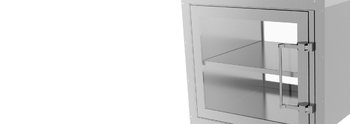
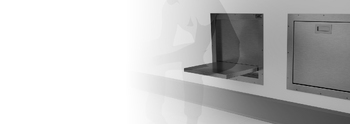
In addition to personnel airlocks, there are also material airlocks—such as pass-throughs, which are generally smaller—designed to transfer equipment or materials in limited quantities between two areas with different cleanliness levels while controlling the risk of contamination.
Filtration systems
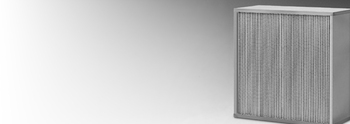
HEPA (High Efficiency Particulate Air) and ULPA (Ultra Low Penetration Air) filters are the standard technologies for capturing airborne particles:
- HEPA filters: Capture 99.97% of particles measuring 0.3 microns; used primarily in ISO 5–9 cleanrooms.
- ULPA filters: Capture 99.999% of particles measuring 0.12 microns; used for ultra-critical applications (ISO 1–4).
Filters must be replaced after a few years, according to the schedules recommended by manufacturers to maintain efficiency.
Construction Materials
Walls, ceilings, and floors should be smooth, nonporous, and easy to clean. Common options include:
- Ready-to-use modular panels (offering quick installation and flexibility)
- Drywall (gypsum) and traditional materials (offering architectural customization)
- Stainless steel, PVC, and other durable finishes that facilitate cleaning and minimize particle retention
Sophisticated HVAC systems
A robust HVAC system is the backbone of any cleanroom, maintaining the precise environmental conditions required. This includes:
- Air handling units with cooling and dehumidification
- Air boost systems to prevent over-condensation after dehumidification
- Precise temperature and humidity sensors with automated control loops
- Redundant systems with failure alarms
Cloaking protocols: the first line of defense
Since humans are the primary source of contamination, gowning protocols are critical. Depending on the required ISO class, personnel must wear:
For ISO 6–9 cleanrooms
- A lab coat or light-weight coverall
- Cap or head covering
- Lightweight mask
- Gloves
- Shoe covers
For ISO 5–6 cleanrooms
- Full-body coverall with zipper
- Full-head hood
- Respirator
- Two pairs of gloves (the second pair on the suit’s cuffs)
- Shoe covers
- Visual inspection of the entire outfit in front of a mirror
For ISO 1–4 (ultra-critical) cleanrooms
- Inner coveralls worn under the outer coveralls (double layer)
- Full-body coverall
- Cap with neck protector
- Face mask and safety goggles
- Two or three pairs of gloves
- Shoe covers
- All clothing changed upon each entry
The order in which items are put on is essential to prevent clean clothing from becoming contaminated through contact with unprotected parts of the body. Similarly, removal must follow a specific sequence to prevent cross-contamination.
The Importance of Behavioral Awareness
Beyond the equipment, personal behavior plays a central role. Rapid movements, which can exceed the speed of the unidirectional airflow (typically 90 feet per minute), create turbulence that stirs up settled particles and disrupts laminar flow patterns. This turbulence can persist for several minutes, affecting multiple workstations.
Proper training in best practices—including measured movements, correct posture, proper equipment handling, and strict personal hygiene—is essential and must be regularly audited.
Conclusion
A cleanroom is much more than just a clean room; it is an integrated environmental control system designed to eliminate contamination at the source while maintaining the precise conditions required for sensitive processes. From airborne particle control to personnel gowning protocols, every element works in harmony to ensure the quality, safety, and regulatory compliance of the products manufactured.
For the pharmaceutical, microelectronics, medical, food, aerospace, and biotechnology industries, cleanrooms are not optional—they are a fundamental requirement for remaining competitive and compliant in the global marketplace.
**CTA IMAGE — INTERNAL LINK TO THE “CLEANROOMS” PAGE**
Des questions sur cet article ? Écrivez-nous !